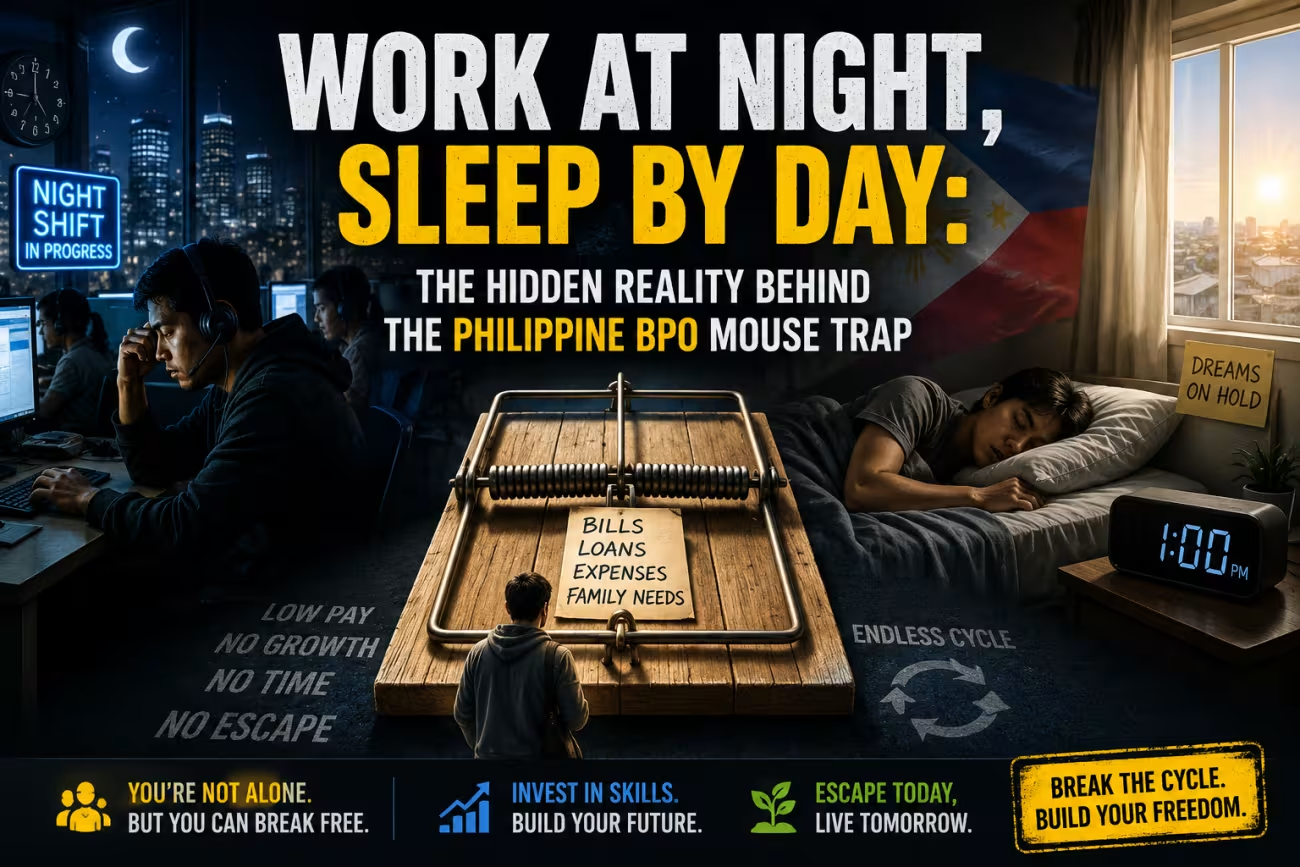
The BPO Mouse Trap: A 20-Year Call Center Veteran Explains Why So Many Filipino Workers Feel Like Zombies—and How to Escape the Survival Cycle
For more than two decades, I have watched the Philippine Business Process Outsourcing (BPO) industry transform millions of lives. It created jobs where there were few opportunities. It allowed young professionals to support their parents, send siblings to college, buy homes, and lift entire families from poverty.
Yet after twenty years inside the industry, I have also witnessed another reality—one that few people openly discuss.
Many workers eventually begin to feel trapped.
Night after night, they answer calls from customers thousands of miles away. They sleep while the rest of the country is awake. Weekends become recovery days rather than opportunities for growth. Years pass quickly, promotions become scarce, health slowly declines, and many realize they are still living paycheck to paycheck.
It can feel like becoming a zombie—awake when everyone else sleeps, exhausted during the day, repeating the same routine over and over.
This article is not meant to criticize BPO workers. I was one of them.
Instead, it is a reflection on why this cycle happens, why so many hardworking Filipinos struggle to escape it, and what practical changes can help create a different future.
The Industry That Changed the Philippines
There is no denying the positive impact of the Philippine BPO industry.
It generated millions of jobs.
It brought billions of dollars into the economy.
It helped countless families afford education, healthcare, and housing.
Many employees built successful careers in operations, workforce management, training, quality assurance, HR, and leadership.
For many fresh graduates, BPO companies offered salaries far above entry-level positions in other industries.
Without question, the industry became one of the strongest pillars of the Philippine economy.
But success at the national level does not automatically translate into long-term financial freedom for every individual worker.
The Routine That Never Ends
For many agents, life eventually follows a predictable pattern.
Wake up in the afternoon.
Prepare for work.
Commute through heavy traffic.
Log in.
Handle difficult customers.
Meet performance metrics.
Take short breaks.
Finish the shift.
Commute home.
Sleep while everyone else is starting their day.
Repeat.
Day after day.
Month after month.
Year after year.
After enough repetition, many employees begin asking themselves a difficult question:
"Is this really my life for the next twenty years?"
Living Against Your Natural Clock
Humans are naturally designed to be awake during daylight and asleep at night.
While many people successfully work night shifts for years, it can still create challenges, especially when sleep schedules become inconsistent.
Common struggles include:
- Difficulty maintaining regular sleep.
- Missing family gatherings held during the day.
- Feeling isolated from friends with daytime schedules.
- Reduced energy for exercise or hobbies.
- Constant adjustment between workdays and days off.
Not everyone experiences these issues to the same degree, but for many long-term night-shift workers, maintaining balance requires continuous effort.
The Survival Trap
One of the biggest reasons people remain in the same position is not laziness.
It is survival.
When your monthly income immediately goes toward:
- rent,
- groceries,
- electricity,
- transportation,
- tuition,
- family support,
- loans,
there is very little room left to invest in yourself.
Every payday already has a destination before the money even reaches your bank account.
This creates what psychologists often describe as a scarcity mindset.
When your attention is consumed by immediate needs, long-term planning becomes much harder. The brain naturally prioritizes solving today's problems over goals that may take years to achieve.
This is not a personal failure—it is a common human response to ongoing financial pressure.
When Hard Work Is Not Enough
Filipinos are among the hardest-working people in the world.
Many BPO employees work overtime.
They accept holiday shifts.
They volunteer for additional responsibilities.
They help teammates.
They consistently exceed performance metrics.
Yet many discover an uncomfortable truth:
Hard work alone does not guarantee wealth.
Income grows only when work is combined with leverage.
Leverage may include:
- specialized skills,
- leadership opportunities,
- investments,
- business ownership,
- intellectual property,
- or scalable digital work.
Without leverage, earning more often requires simply working more hours.
The Mouse Trap
Imagine a mouse running endlessly inside a wheel.
The mouse moves constantly.
It becomes tired.
It expends enormous energy.
Yet it never actually goes anywhere.
Many workers describe feeling exactly like this.
Every year they receive small salary increases.
Inflation rises.
Living expenses increase.
Family responsibilities grow.
The paycheck becomes larger.
Yet financial freedom remains just as distant.
Movement is happening.
Progress feels limited.
Why Weekends Become Escape Days
People sometimes criticize workers for spending weekends drinking, gaming, binge-watching shows, or scrolling endlessly through social media.
But there is another perspective.
Many of these activities are not simply entertainment.
They are recovery.
After handling emotionally demanding work, constant customer interactions, performance metrics, and overnight schedules, people seek quick ways to relieve stress.
Psychologists refer to this as seeking immediate rewards after prolonged effort.
A few hours with friends may provide emotional relief, even if it does not improve long-term financial security.
That does not mean every coping habit is healthy—but understanding the reason behind it is more helpful than judging it.
The Power of Community
Filipino culture places tremendous value on relationships.
Sharing meals.
Celebrating birthdays.
Gathering with friends.
Supporting family members.
These traditions are strengths.
At the same time, social expectations can sometimes make it difficult for people to pursue different paths.
Someone who begins investing heavily in education, building a side business, or saying no to every social gathering may occasionally be misunderstood.
Finding a balance between community and personal growth is often one of the biggest challenges.
The Missing Dream Map
Many workers never create a clear long-term plan.
Not because they lack dreams.
But because no one taught them how to turn dreams into practical milestones.
Instead of asking:
"Where do I want to be in ten years?"
many are forced to ask:
"How will I pay next month's bills?"
A dream without a roadmap often remains only a dream.
Skills That Create Leverage
The world is changing rapidly.
Today's economy increasingly rewards specialized knowledge.
Examples include:
- software development,
- cybersecurity,
- cloud computing,
- artificial intelligence,
- digital marketing,
- video editing,
- project management,
- sales,
- financial analysis,
- entrepreneurship,
- content creation.
Many of these skills can be learned gradually while maintaining full-time employment.
The goal is not to quit immediately.
The goal is to slowly increase your future earning potential.
Financial Literacy Matters
Many schools teach mathematics.
Few teach money management.
Important topics often learned too late include:
- budgeting,
- investing,
- emergency funds,
- compound interest,
- insurance,
- retirement planning,
- business fundamentals.
Learning these concepts can dramatically change long-term financial outcomes, even without a dramatic salary increase.
Small Investments Create Big Changes
Escaping the survival cycle rarely happens overnight.
Instead, it often begins with small, consistent actions.
Reading one book each month.
Taking one online course.
Saving a fixed percentage of income.
Building one additional skill.
Creating one digital product.
Starting one freelance client.
Learning one new technology.
These actions may seem insignificant individually, but over several years they can compound into meaningful career opportunities.
Protect Your Health
Many long-term BPO professionals discover that health becomes increasingly valuable with age.
Night work, stress, and sedentary routines can affect physical and mental well-being.
Simple habits can make a meaningful difference:
- prioritize consistent sleep,
- exercise regularly,
- eat balanced meals,
- stay hydrated,
- reduce excessive caffeine,
- schedule regular medical checkups,
- maintain social connections.
A successful career is difficult to enjoy without good health.
Build Income Beyond Your Salary
One of the most powerful lessons many professionals eventually learn is that relying on a single paycheck carries risk.
Additional income streams might include:
- freelancing,
- consulting,
- online education,
- digital products,
- blogging,
- affiliate marketing,
- investing,
- small businesses.
Building these gradually can increase financial resilience and create more options over time.
Do Not Let Twenty Years Pass Without Growth
Many people intend to learn new skills "next year."
Then next year becomes five years.
Five years becomes ten.
Before long, twenty years have passed.
Time moves regardless of whether we invest in ourselves.
The earlier growth begins, the more opportunities it creates.
The Industry Is Not the Enemy
The BPO industry itself is not a trap.
For countless families, it has been a pathway to stability and opportunity.
The trap emerges when workers believe that the job alone will eventually deliver financial independence without additional planning, skill development, or long-term investment.
Employment provides income.
Personal growth creates options.
Combining both offers the strongest foundation.
Advice to New BPO Employees
If you are just starting your career, consider these principles:
- Appreciate the opportunity your job provides.
- Live below your means when possible.
- Save consistently, even small amounts.
- Invest in learning high-demand skills.
- Protect your physical and mental health.
- Build an emergency fund.
- Explore additional income sources gradually.
- Create a written five-year and ten-year career plan.
- Review your progress every year.
- Remember that your current job can be a stepping stone rather than your final destination.
Final Thoughts
After twenty years in the BPO industry, I have learned that the greatest danger is not working at night.
It is allowing routine to replace purpose.
Many Filipino workers are incredibly resilient. They work hard, support their families, and make tremendous sacrifices. Those qualities deserve respect.
At the same time, resilience should not mean accepting permanent stagnation.
The goal is not simply to survive another shift.
The goal is to build a life where your skills, health, finances, and future continue to grow alongside your career.
The BPO industry can provide the starting point.
What happens after that depends on the decisions we make outside our shifts—the books we read, the skills we develop, the habits we build, and the long-term vision we create.
You are not defined by your schedule.
You are not limited by your current position.
Every small investment in yourself today can become the foundation of greater freedom tomorrow.
The mouse wheel only keeps spinning if we never step off it. The first step toward a different future is recognizing that growth is possible—and then taking one deliberate action, day after day, toward the life you truly want.
Comments